THE MOST POPULAR TRAVEL PLACES AROUND THE WORLD


THE MOST POPULAR VACATIONING PLACES IN THE WORLD Headline Animator

Showing posts with label Vacations. Show all posts

Saturday, December 12, 2009

Beach vacations to please the entire family


When Judi Silverman's children were young, she used to take them to Half Moon Resort in Jamaica's Montego Bay on holiday.

Forty years later, the New Jersey-based travel agent happily sends young families there because, she says, she knows firsthand that "when they say they are a family resort, they mean it.

A lot of times resorts will call themselves 'family friendly' but you can tell right away if it's just in the brochures but not in the attitude of the staff."At Half Moon, for example, kids are welcome in all of the restaurants, yet there is also a restaurant with special children's menus should parents prefer that option.

There's a reasonably priced Kid's Club for younger children ages 3 to 12 and one for 'tweens and teens that the resort offers, as well as tennis clinics, a riding stable and a game room, in addition to myriad water sports. The resort even recently added a Dolphin Experience in which kids can nuzzle up to a dolphin and even ride its dorsal fin.

What's in it for Mom and Dad? The largest spa in the Caribbean, for starters. And the elegant resort now offers all-inclusive packages, which is helpful in a time when even luxury travelers are tightening the belts on their terrycloth robes.According to the Travel Industry Association, leisure travel is expected to decline only slightly in 2009 (by 1.3 percent), despite the economic downturn.

However, people surveyed by the TIA say they will vacation differently, with 76 percent expecting to book a packaged vacation to save money."All-inclusive used to get a bad rap because it meant a lesser experience,'' says Edmundo Roa, manager of Let's Take the Kids Travel Agency in Ottawa, Canada, which specializes in booking family travel.

But now that luxury resorts have gotten into the family-travel niche, "It just means you're getting more for your money," says Roa. "It also means an easy, no-brainer vacation, which, sometimes, is exactly what's needed."

Expert opinion-To find 10 great family-friendly beach destinations, we asked a panel of family-travel experts to name their favorite vacation spots where kids will have a ball and parents can get some much-needed respite and relaxation. But there's even more to it than that when it comes to finding the perfect vacation spot, experts say.

Suzanne Rowan Kelleher, editor of the tell-it-like-it-is family travel Web site WeJustGotBack.com, says so many resorts have gotten into the family act, it's important to "find the resort that's right for your particular family." She therefore shies away from the broad term "family resort" on her Web site because, she says, "what's right for a couple with a baby (great nanny service, for example) may not be right for a family with 'tweens or teens."

One resort that seems to have all the bases covered, our travel experts agree, is Club Med's Ixtapa resort in Mexico. Between the Baby Med program which means your room will be stocked with everything from a stylish crib to bottle warmers and diapers and the Circus Camp where older children learn to juggle and swing on a flying trapeze, the resort caters to every member of the family. From January through April 2009, the resort is offering seven nights for the price of three, starting at $965 a person, all-inclusive.

"It's really great when your children can come home from a beach vacation having done something they've never done before like flying through the air or canopy climbing," says Kelleher.Canopy climbing, literally gliding through the treetops, is one of the activities offered at the Los Suenos Marriott in Guanacaste, Costa Rica, another resort that made our list. Family packages there start at $339 to $579 per night, all inclusive, for a family of two adults and two children under six.

Kelleher says while many "family resorts" tout kids' clubs where parents can drop off their kids for the day, then play a round of golf or learn to hula or surf, it behooves parents to inquire about the activities offered at these clubs. Many of tem are more appropriate for toddlers and are nothing more than glorified — and pricey — baby-sitting centers, she says.

"The real litmus test is whether or not your kids want to go the next day," says Kelleher. "You're not going to get much hammock time in if your kid is bored with the club activities."No boredom is likely at the Hilton Hawaiian Village on Waikiki, where creative club activities also teach about Hawaiian culture. Alternatively, take the family to the newly revamped Ritz-Carlton Naples, for budding marine biologists.

The resort boasts 11 aquariums, including touch tanks where kids can get up close and personal with turtles and starfish. Older children can hang out in the hotel's laboratory, playing with Petri dishes and microscopes."The hotel really gives kids a sense of place because they learn all about the Floridian eco-system," says Kelleher. And because it's a Ritz-Carlton property, parents know their needs will be met, too.

Oh, and there's that postcard-perfect beach. All this will set you back about $675 a night for a coastal room that would accommodate two adults and two children.In safe hands-When evaluating kid-friendly resorts, Kelleher says, there's always a concern about the staff that will be looking after your children, what Kelleher refers to as "the X factor."

In that department, it's hard to top The Winnetu Inn & Resort on Martha's Vineyard, where kids' camp comes free with the room, and activities include combing for seashells, agility ladder courses and putting contests. The young and eager counselors — 22 for 100 children — are, for the most part, college students and aspiring teachers who grew up on the Vineyard and know what a special place it is, says Kelleher, so they have a great rapport with the kids.

"They're the kind of counselors who'll take the time to hold a child's hand or dust the sand off their toes," says Kelleher.That, she says, is priceless. But whatever resort you choose, Kelleher says it's important to sit down with your kids and talk about things they'd like to do before you board the plane. The ideal vacation is when both parents and children come home having done exactly what they wanted to do."This ensures that, come the next family vacation, they'll definitely want to come along."

Friday, December 4, 2009

How to take better vacation photos

Image stabilization, automated scene modes, and face, smile, or blink detection can only take you so far. To get the best photos, you need to know when and how to use all those fancy features of your digital camera, and you need to know a thing or two about composition and light. In a recent post on his New York Times Gadgetwise blog, Rik Fairlie shared 13 great tips for shooting better vacation photos. [Full disclosure: the photographer he interviewed for the Q&A is my husband, Dan Lipow, who teaches digital photography classes in exotic locales.] Here are a few tips that I found most useful:

How to make photos of landscapes more interesting

Change your perspective by getting very low or as high as you can. Most people don’t go that far: they stand there, frame the photo and click. Instead, try climbing up on a wall or getting down on the ground.

Also, look for ways to add perspective, include a foreground element — a tree or a bush — that is not in focus. If you have something that is on the edge of the image, it helps to frame what you’re looking at. This will help you get a more interesting shot.

How to take the best sunset shot
Underexpose it a lot. That will help you capture the incredible reds, rich oranges and yellows. I use the manual mode to underexpose, usually about two to four stops. The exposure compensation features on most cameras have only three stops, and some have only two stops. Manual mode provides the best way to reduce the light level.

How to get better photos in the bright mid-day sun
First, you can utilize your camera’s ability for exposure compensation. If you underexpose a very bright scene, by one-third or two-thirds of a stop, that adds richness to it. I also set my camera’s white balance to a cloudy setting or an open shade setting. These settings will help warm up the image, and that can add a lot more dimension to the photo.

Another thing, in planning your trip you should remember that there are places that are better or worse to be, depending on the time of day. If you are in a European city and want to go to the old quarter, which may be a warren of little alleyways, midday is a good time to be there. But if you’re next to an open area, a riverfront for instance, in the middle of a bright day, the afternoon is a bad time to be there. Go to river late in the day, and visit the old town in the middle of the day. It will be cooler there then, and the light will be right

Saturday, November 28, 2009

Top things to do in Europe

Paris See the ancient artifacts in the Louvre Museum as well as the Venus de Milo and the Mona Lisa. The Eiffel tower as also a destination in Paris, France. You can acturally take an elevator both day and night to get near the top of the tower. Paris is full of great culture and history.

eiffel tower paris franceparis franceparis seine liberty francegrand louvre courtyard and pyramid paris france photo

Rome Great Italian food and sites such as the spanish steps and the Colliseum make Rome a great place to visit. Just take a map when you are walking around the large city so you don't get lost and dehydrated like I did.

rome colliseumromerome vaticanrome fountain

London Lots of attractions including Bin Ben and the Houses of Parliament, the Tower Bridge, Trefalgar Square, and Buckingham Palace. London is a very safe and easy place to travel. You can even take a scary and interesting Jack the Ripper tour.

london busestower bridgelondonlondon

Amsterdam A city filled with manmaid canals, Amsterdam is both historic and overly liberal at the same time. Unfortunately, the visitors that traveled to see the Anne Frank Museum will run into travelors that came to Amsterdam to get high.

amsterdamamsterdamred light districtamsterdam

Santorini, Greece The most beautiful place I have ever traveled, Santorini, Greece is an island that offers great food, the best beaches in the world, and friendly people. The island is very inexpensive once you get there. It is the flight to Athens that will strip you money away.

santorinisantorinisantorinisantorini greece

barcelona Barcelona attractions include the Sagrada Familia by Antonio Gaudi, the great Barcelona Zoo, and good public beaches. This artistic city will pleasantly satisfy you.

barcelonabarcelonabarcelonabarcelona

Berlin, Germany Beer, history, culture, and good people. Berlin was good to me. The glass dome of the Reichstag is worth a visit as is Checkpoint Charlie. It is interesting to see the differences in the east and west sides of the city since it was recently unified following the cold war.

berlinberlin germanyberlin germanyberlin wall

Moscow, Russia We call it part of Europe even though some call it an Asian location. Most in the world will need a visa to enter Russia, but it is well worth it. The unique-colorful architecture domes reside in Moscow, St. Petersburg, and other parts of western Russia.

moscowmoscow russiamoscow russiarussia

Prague, Czech Republic One of the most beautiful cities in the world. Prague was erected by the work of Europe's finest artists and architects over a 600 year period. See the famed bridges, cobbles streets, and unique buildings.

praguepraguepragueprague

Tuesday, November 24, 2009

View World's Best Rooms to Feast Your Eyes


View World's Best Rooms to Feast Your EyesAl Maha Desert Resort & Spa is an exclusive oasis in the Dubai Conservation Reserve. The 42 luxurious suites, each with private temperature-controlled pools, offer awe-inspiring sand dune views.


View World's Best Rooms to Feast Your EyesSheraton Iguazu Resort and Spa, Argentina. Surrounded by rainforest, the 180-room, three-floor resort in the heart of World Heritage-listed Iguazu National Park is within walking distance of Iguazu Falls.


View World's Best Rooms to Feast Your EyesSince 1568, the rich and famous have been drawn to Italy's Villa d'Este to feast their eyes on Lake Como's ethereal beauty. The hotel's 152 rooms and suites are decorated with period furniture, oil paintings, Como silk and linen sheets.

View World's Best Rooms to Feast Your EyesDesigned to capture views of one of the world's most-visited man-made wonders, the Taj Mahal, the Moorish and Mughal-inspired Oberoi Amarvilas is an opulent shrine to luxury.

View World's Best Rooms to Feast Your EyesA room overlooking the harbour at the InterContinental Hong Kong has seats to the world's largest permanent light-and-sound show - a dazzling display of Hong Kong's skyline with flashing neon-lit skyscrapers, laser beams and searchlights.

Top 5 World's Most Amazing Island

Check out these interesting Islands, very interesting info!

5. ALCATRAZ ISLAND (USA): Home to the first lighthouse on the Pacific Coast

ALCATRAZ ISLANDAlcatraz Island (sometimes informally referred to as simply Alcatraz or by its pop-culture name, The Rock) is a small island located in the middle of San Francisco Bay in California, United States. It served as a lighthouse, then a military fortification, then a military prison followed by a federal prison until 1963, when it became a national recreation area. The first European to discover the island was Juan de Ayala in 1775, who charted the San Francisco Bay and named the island "La Isla de los Alcatraces", which means "Island of the Pelicans".

The discovery of gold in California in 1848 brought thousands of ships to San Francisco Bay, creating an urgent need for a navigational lighthouse. In response, Alcatraz lighthouse #1 was erected and lit in the summer of 1853. Because of its natural isolation in the middle of a bay, surrounded by cold water and strong sea currents, Alcatraz was soon considered by the U.S. Army as an ideal location for holding captives. Alcatraz was the Army's first long-term prison, and it was already beginning to build its reputation as a tough detention facility by exposing inmates to harsh conditions and iron fisted discipline. Due to rising operational costs because of its location, the Military Department decided to close this famous prison in 1934, and it was subsequently taken over by the Department of Justice and later became the famous federal prision and finally a recreation area.


4. EASTER ISLAND (Polynesian triangle, Chile): World heritage site and one of the most isolated inhabited islands in history

EASTER ISLANDEaster Island is one of the world's most isolated inhabited islands. It is 3,600 km (2,237 miles) west of continental Chile and 2,075 km (1,290 miles) east of Pitcairn. Nowdays, it is a Chilean-governed island, and is a world heritage site with much of the island protected by the Rapa Nui National Park.

First settled by a small party of Polynesians, Easter Island is one of the youngest inhabited territories on Earth, and for most of its history it was the most isolated inhabited territory on Earth. Its inhabitants the Rapanui have endured famines, epidemics, civil war, slave raids and colonialism; have seen their population crash on more than one occasion, and created a cultural legacy that has brought them fame out of all proportion to their numbers.


3. SEALAND (Principality): World's smallest island

SEALAND The Principality of Sealand is an island and a micronation located on HM Fort Roughs, a former Maunsell Sea Fort located in the North Sea 10 km (six miles) off the coast of Suffolk, England, in what is claimed as territorial waters using a twelve-nautical-mile radius.

Since 1967, the installation has been occupied by associates and family of Paddy Roy Bates, a former radio broadcaster and former British Army Major, who claims that it is a sovereign and independent state. Critics, as well as court rulings in the United States and in Germany, have claimed that Roughs Tower has always remained the property of the United Kingdom, a view that is disputed by the Bates family. The population of the facility rarely exceeds ten, and its habitable area is 550 m2 (5920 sq ft).

Sealand's claims to sovereignty and legitimacy are not recognised by any country, yet it is sometimes cited in debates as an interesting case study of how various principles of international law can be applied to a territorial dispute.


2. SURTSEY (Iceland): The emerging island

SURTSEYOff the coast of Iceland on the morning of 14 November 1963, the crew of a lone fishing trawler spotted an alarming sight. Off to the southwest of the Ísleifur II, a column of dark smoke was rising from the water. Concerned that it could be another boat on fire, the captain directed his vessel towards the scene. Once there, however, they found not a boat but a series of violent explosions producing ash. This was an unmistakable indication of a volcanic eruption taking place underwater, close to the surface. Very aware of the potential danger but eager to watch, the crew kept their boat nearby. It was indeed a remarkable event that they would witness a small part of over the course of that morning: the formation of a brand-new island.

Although now quite visible, the eruption lasted for much, much longer than the Ísleifur II would have been able to watch. After several days, the volcano had broken the water's surface, forming an island over 500 meters long and 45 meters tall. Even though the rough tides of the North Atlantic might have soon eroded the new island away, it was named Surtsey, meaning 'Surtur's island' - Surtur (or Surtr) being a fire giant of Norse mythology. The island proved to be tenacious, however. The eruption was ongoing and Surtsey increased in size more quickly than the ocean could wear it down. In the meantime two other nearby volcanic eruptions produced the beginnings of islands, but neither lasted very long. By April 1964, though, the most violent parts of the eruption were over and Surtsey remained.


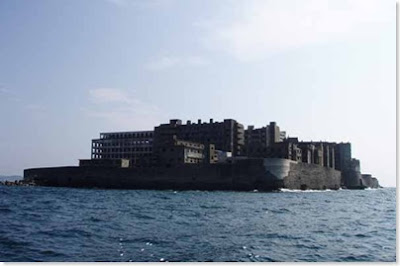
1. GUNKANJIMA (Japan): The Ghost (and forbidden) Island

GUNKANJIMA Gunkanjima is one among 505 uninhabited islands in the Nagasaki Prefecture about 15 kilometers from Nagasaki itself. The island was populated from 1887 to 1974 as a coal mining facility. The island's most notable features are the abandoned concrete buildings and the sea wall surrounding it. It is known for its coal mines and their operation during the industrialization of Japan. Mitsubishi bought the island in 1890 and began the project, the aim of which was retrieving coal from the bottom of the sea. They built Japan's first large concrete building, a block of apartments in 1916 to accommodate their burgeoning ranks of workers, and to protect against typhoon destruction.

Gunkanjima is one among 505 uninhabited islands in the Nagasaki Prefecture about 15 kilometers from Nagasaki itself. The island was populated from 1887 to 1974 as a coal mining facility. The island's most notable features are the abandoned concrete buildings and the sea wall surrounding it. It is known for its coal mines and their operation during the industrialization of Japan. Mitsubishi bought the island in 1890 and began the project, the aim of which was retrieving coal from the bottom of the sea. They built Japan's first large concrete building, a block of apartments in 1916 to accommodate their burgeoning ranks of workers, and to protect against typhoon destruction.

In 1959, its population density was 835 people per hectare for the whole island, or 1,391 per hectare for the residential district, one of the highest population density ever recorded worldwide. As petroleum replaced coal in Japan in the 1960s, coal mines began shutting down all over the country, and Hashima's mines were no exception. Mitsubishi officially announced the closing of the mine in 1974, and today it is empty and bare, which is why it's called the Ghost Island. Travel to Hashima is currently prohibited.

Free advertising